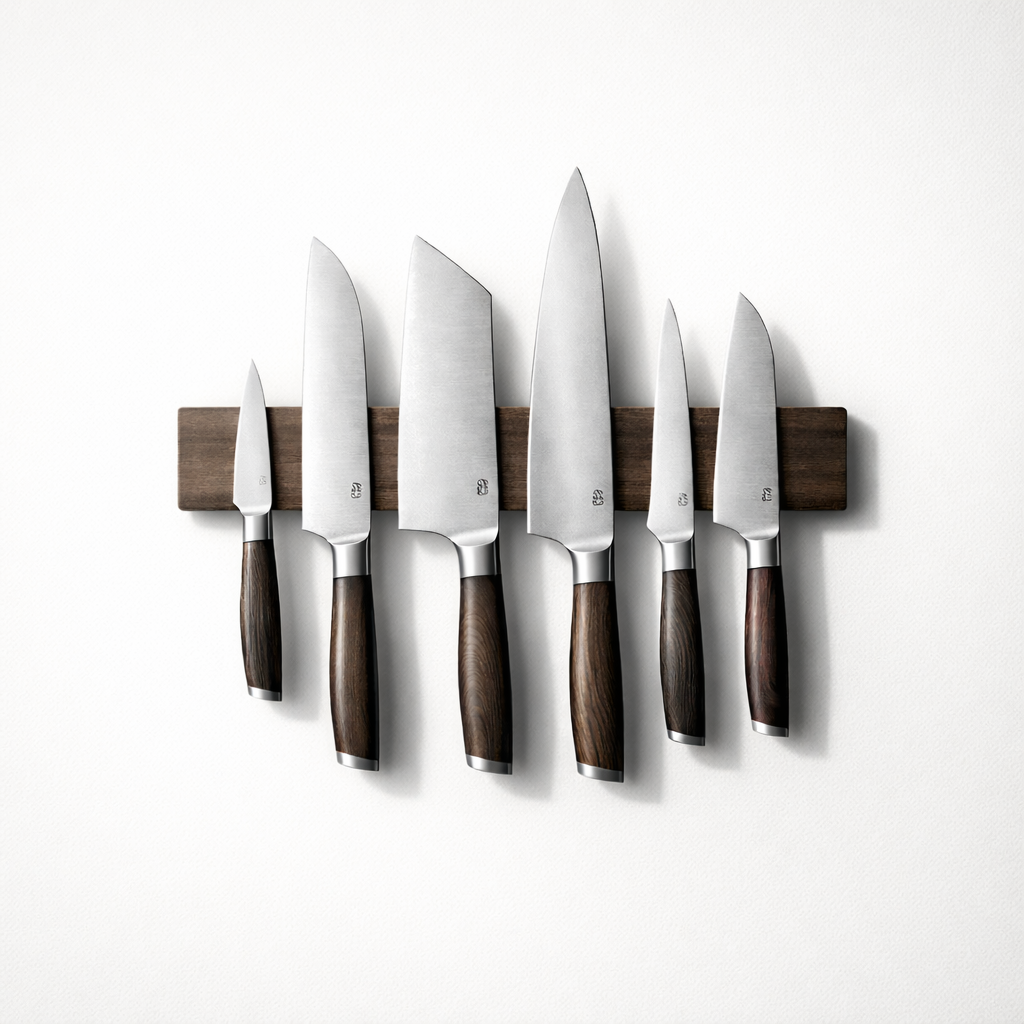
The Vision
We will be working with experienced blacksmiths and knifemakers to design the first commercial green steel knife.
The Design
No confirmed design yet, because we refuse to rush it. From the blade to the handle to the packaging, every detail has to be right.
The Steel
We will be building the manufacturing systems to produce green steel that meets the standard required for high-end knives.
The Science
By removing coal from the process, hydrogen reduction also removes coal-based impurities. Early research suggests this could lead to a cleaner, more consistent steel.
Our goal is to make a product that is not just sustainable
but genuinely worth owning.
The Problem
Steel is everywhere. So are its emissions.
Steel is in the buildings we live in, the cars we drive, the tools we cook with. It is one of the most important materials in human history. But the way we make it is destroying the planet.
The steel industry accounts for 7-8% of global greenhouse gas emissions, more than the total annual emissions of any country on Earth except China and the United States. Around 70% of steel is still made using coal-fired blast furnaces, and globally the industry emits approximately 4.1 billion tonnes of CO2 every year.
This is not a niche problem. It is one of the largest unsolved climate challenges on earth.
The Solution Exists
We already know how to make steel without coal. The problem is nobody is buying it.
Hydrogen-based direct reduction (H2-DRI) replaces coal with hydrogen as the reducing agent. Instead of CO2, the byproduct is water. It can cut steelmaking emissions by up to 95%.
Companies like HYBRIT and H2 Green Steel have proven it works. The technology is real. But green steel currently costs 79% more to produce than conventional steel.
Recycled steel helps, but global demand far exceeds available scrap. Carbon capture is a band-aid that does not eliminate the fundamental reliance on coal.
The only path to truly clean steel is hydrogen reduction. And the only way to bring the cost down is to build the market.
Why a Paid Waitlist
A refundable deposit is the most honest signal there is.
Anyone can fill out a form. A $50 deposit means you actually believe in this. It is the difference between interest and intent. That distinction is everything when you are trying to convince producers to retool their operations for a material that costs more.
Your deposit is fully refundable at any time before production begins. You are not locked in. But until you ask for it back, your $50 sits in the evidence pile, proof that this market exists.
If enough people put money down, it changes the conversation entirely. It goes from “would people buy green steel?” to “people are already buying green steel.”
Where We Are Going
Knives are just the start.
Once we prove the materials work and people want them, we expand into adjacent premium categories (chef tools, cookware, watches, jewellery) and use that revenue to drive the cost of green steel down toward industrial scale.
We are not just building products. We are building the supply chain for a sustainable future.
VACSO was founded by Oscar Osborne. To read more about his journey and how VACSO came about, visit his personal site.
oscarosborne.com